
The Role of Continuous Testing in a DevOps Environment
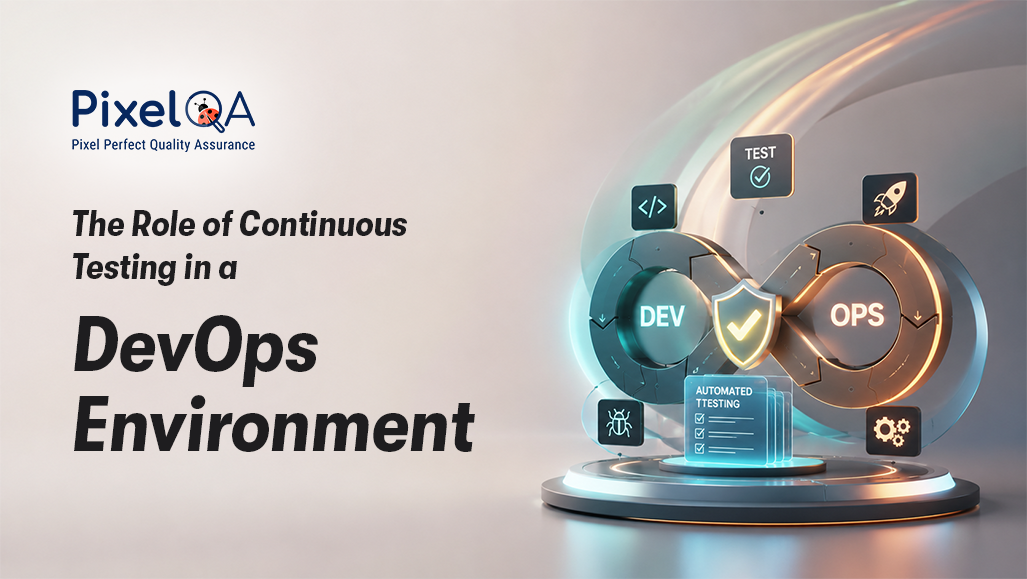
TL; DR
Continuous testing is a core DevOps practice that integrates automated testing throughout the CI/CD pipeline, ensuring every code change is validated before reaching production. Instead of treating testing as a final checkpoint, teams run automated unit, integration, performance, and production monitoring tests continuously to catch issues early.
By providing rapid feedback, continuous testing helps teams release software faster, reduce bugs, improve collaboration between development, QA, and operations teams, and maintain high software quality. While challenges such as test automation setup, flaky tests, environment management, and test data maintenance exist, the long-term benefits far outweigh the initial investment. For teams building reliable products, software testing services brings the broader validation discipline needed to keep releases stable.
Continuous testing enables organizations to deliver reliable software at speed by making quality assurance an ongoing, automated part of the development process rather than a last-minute activity.
Software teams are always being pushed to ship faster without breaking everything. In old school setups, testing was basically an afterthought. Something you jammed into the schedule right before launch. It was a terrible bottleneck. Bugs would pile up, and by the time you found them, tracking down the actual cause was a nightmare.
DevOps was supposed to fix this by forcing development and operations teams to actually collaborate. Continuous testing is the practical engineering side of that idea. Instead of treating QA like a toll booth at the end of the road, you automate tests so they run against every single commit. Partnering with Automation Testing Services enables businesses to build scalable automated testing pipelines that catch breaking changes immediately when they're still easy to fix, making deployments faster, safer, and more reliable.
Why Continuous Testing Matters in DevOps
If you accelerate your release cycles without automated testing, you're simply pushing bugs into production faster. The real value of continuous testing is the immediate feedback loop. Catching a defect five minutes after you commit code is a minor annoyance. Finding it two weeks later during a staging regression pass is a context-switching nightmare.
Automating these checks gives you a predictable safety net. You get a clear view of how new code interacts with the existing system before it ever reaches a live environment. It removes manual bottlenecks, constant handoffs, ticket queues, and long waiting periods so your team can deploy on demand.

Continuous Testing Across the CI/CD Pipeline
Continuous testing spans the entire software delivery lifecycle. Different types of tests are executed at various stages to ensure applications meet performance and reliability requirements.
Commit Stage
The workflow begins the moment a developer pushes code to the shared repository. Automated unit tests immediately verify that individual components and functions behave correctly. At the same time, static code analysis tools scan the codebase for security vulnerabilities, coding standard violations, and potential bugs. This stage acts as the first quality gate, catching obvious issues before broken code progresses further through the pipeline.
Acceptance Stage
After passing the initial validation, the application moves into a staging environment where automated functional and integration tests are executed. Functional tests verify that business requirements are met, while integration tests ensure that different services and components communicate correctly. This stage is especially valuable for identifying complex issues that individual unit tests cannot detect.
Performance Stage
Performance testing identifies system limitations before customers experience them. Automated load and stress tests simulate realistic user traffic to uncover latency, memory leaks, scalability issues, and database bottlenecks. For organizations handling high traffic volumes or financial transactions, this stage is critical for maintaining system reliability under pressure.
Production Stage
Testing does not end after deployment. Automated smoke tests verify that essential application functionality remains operational immediately after release, while continuous monitoring tracks error rates, response times, system performance, and user behavior. Production monitoring provides valuable insights that help teams prioritize bug fixes, optimize performance, and guide future development decisions.
The Business Benefits of Continuous Testing
Continuous testing dramatically reduces the cost of fixing defects by identifying issues before they reach production. Rather than spending hours resolving emergency production incidents, teams can address problems within minutes during development.
Automated testing also improves collaboration between development, QA, and operations teams. Since everyone relies on the same automated validation process, misunderstandings decrease, and troubleshooting becomes significantly more efficient.
Faster testing enables faster releases. Organizations no longer need to wait for lengthy manual regression cycles, allowing them to deliver new features more frequently while maintaining confidence in software quality.
Common Challenges and How to Address Them
One of the biggest challenges is transitioning from manual testing to automation. Organizations with extensive manual test libraries often require significant time and investment to build reliable automated test suites. This includes selecting suitable testing frameworks, purchasing tools, and training engineers.
Another common issue is flaky tests, which generate inconsistent results and reduce confidence in the testing process. Regular maintenance, refactoring, and monitoring of automated test suites are essential to keep results reliable.
Test environment management can also become a bottleneck. Infrastructure as Code (IaC) helps teams automatically provision environments that closely mirror production, improving testing consistency across deployments.
Test data management is equally important. Automated testing relies on realistic and up-to-date datasets. By automating test data generation and refresh processes, organizations can improve both testing accuracy and overall efficiency.
Conclusion
Continuous testing prevents defective code from reaching production by validating every change throughout the CI/CD pipeline. Automated testing transforms quality assurance from a stressful final checkpoint into an ongoing, integrated process that enables faster, safer software delivery.
If your testing strategy is struggling to keep pace with your release schedule, PixelQA can help. Our QA and software testing experts can build a continuous testing strategy tailored to your development pipeline, allowing you to deliver stable, high-quality software with confidence.