
TestRigor: Revolutionizing Test Automation with AI

Table of Contents
These days, building top-notch software fast isn’t some extra perk-it’s something every team has to manage just to keep it up. Software Companies are always looking for smarter ways to get work done, cut back on Software manual testing, and make sure users don’t run into problems and find bugs. That’s where new test automation tools step in. TestRigor is a great example of this new wave. It’s totally changing the way people think about software testing, making the whole testing process faster, easier, and a lot less stressful.
What is TestRigor
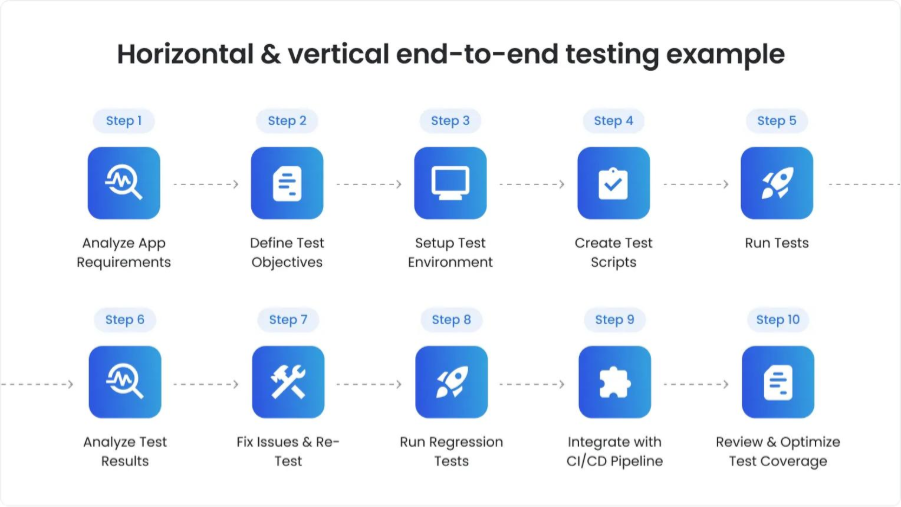
Software testing shouldn’t be a headache. With TestRigor, automation engineers can write and run tests just by using simple English. No need for complex automation frameworks or coding language knowledge. Nowadays, everyone can jump in - developers, QA folks, business analysts, or even people who aren’t tech-savvy. It’s straightforward, and honestly, it makes life a whole lot easier.
Here’s the deal: TestRigor uses AI and natural language processing to read your English test instructions and turn them straight into automated steps. No more hassle with complex XPath or CSS selectors. The tool picks out UI elements just like a human Eye would-based on what you actually see, like text, labels, or context. So when your UI shifts around, your tests usually still work, and you don’t waste time constantly fixing them.
How TestRigor Works
Key Features of TestRigor
1. Plain English Test Creation
One of the most different features of TestRigor is its ability to interpret human-readable instructions. Users can write test cases like:
“Click on the login button”
“Enter username ‘John Doe”
“Enter Password ‘John@123”
“Verify that the dashboard is visible after clicking the Login Button”
This totally excludes the need for learning coding languages such as Java, Python, or JavaScript, making automation testing more inclusive and efficient.

2. AI-Based Element Detection
Traditional tools often depend on XPath or CSS selectors of elements, which can easily break when UI changes are made. TestRigor uses AI to find the elements based on their visible properties, reducing maintenance efforts significantly. This means tests are more robust and require fewer updates over time.
3. Self-Healing Tests
UI changes are a common challenge in the automation testing process. TestRigor addresses this issue with self-healing capabilities. When small changes are made in the Software, the tool intelligently adapts without causing test failures, saving time and reducing false negatives.
4. Cross-Platform Testing
TestRigor makes it very easy to test software on all kinds of available platforms-web apps, mobile apps, even APIs.
Then your team can be confident that everything works regardless of operational context and be assured that nothing is being overlooked.
5. CI/CD Integration
Nowadays, most organisation teams totally depend on CI/CD for speedy development and deployment. TestRigor fits right in with the top CI/CD tools, so you can automate your tests directly in your pipeline. This keeps your releases smooth and reliable, without adding extra steps.
Benefits of Using TestRigor
Reduced Dependency on Developers
You don’t have to be a Software engineer or need to learn coding language to prepare tests with TestRigor. All team members can write test cases using simple English, allowing even greater community involvement in the testing phase. This lightens the burden on the developers and accelerates the progress for the entire project.
Faster Test Creation
Building automation scripts the old way eats up time and energy for automation engineers. TestRigor speeds things up-you can put together test cases quickly, so your team doesn’t fall behind during fast release cycles.
Lower Maintenance Costs
It often drains both time and budget. TestRigor turns that around with AI that reduces constant updates, so teams save money and hassle down the road.
revised Test Coverage
When test creation gets easier, the team can come up with more test cases and explore different scenarios. That means the software ends up more reliable.
Enhanced Collaboration
TestRigor connects technical and non-technical people. Since all team members can read, edit, and contribute to writing test cases, it fosters collaboration.
How TestRigor Works
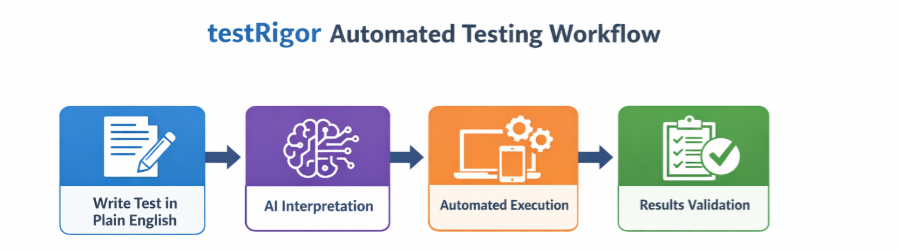
With TestRigor, you just type out what you want in plain English, and it handles the rest right in your app. Its AI isn’t just sniffing out code names-it actually looks at the screen and notices where things are, kind of like a real person would. If you tell it, “Click on the ‘Submit’ button,” TestRigor searches for that button, checks the label, and clicks it, just like any user.
Test runs capture and record all relevant information, including logs and screenshots. When there is a crash, the problem is immediately identifiable and fixable without any hassle.
Use Cases
1. Regression Testing
TestRigor really stands out for regression testing Services. It's adept when new changes mess with old working features in software, and because it’s stable and doesn’t need much hassle, you can run these tests repeatedly. Teams facing similar quality risks often use ai testing services to validate these areas before release.
2. End-to-End Testing
This TestRigor tool successfully replicate the activities and experiences of actual users (such as logging in and checking out), allowing the entire workflow to be tested for seamless operation.
3. Smoke Testing
Quick smoke tests can be created and executed to verify critical functionalities after each deployment.
4. Accessibility Testing
You can use this TestRigor tool to ensure that your software is easily accessible to real non technical users and that it can be used by everyone without any issues.
Challenges and Limitations
But TestRigor isn’t perfect. Here’s where you might run into some bumps:
Learning Curve for Language Rules: Sure, you write tests in plain English, but you still have to follow specific guidelines. If you aren’t clear, TestRigor can misunderstand what you want from the tool.
Limited Customisation: People who have experience with traditional coding frameworks often see how less flexible TestRigor is in comparison. There are some customisation options available, but most are quite basic.
AI Dependency: Everything hinges on how accurately the AI reads your instructions. Sometimes it gets things wrong-and that can trip you up.
Comparison with Traditional Tools
Traditional tools like Selenium demand you learn a coding language, spend time setting everything up environments, and need to deal with constant updates just to keep things running. TestRigor removes all that hassle. There's no need for you to write in any programming language, and you don't need to babysit your tests to ensure they continue to function.
| Feature | Traditional Tools | TestRigor |
|---|---|---|
| Coding Required | Yes | No |
| Maintenance Effort | High | Low |
| Test Stability | Moderate | High |
| Accessibility | Limited | Broad |
| Speed of Creation | Slow | Fast |
Really, the difference is night and day. TestRigor is shaking up the testing world by making things way simpler and much more efficient.
Future of AI in Test Automation
AI tools like TestRigor are shaking up software testing. They don’t just handle repetitive tasks-they actually learn and improve along the way. As AI gets better, testing will become faster, more accurate, and require less manual QA Testing.
We’re starting to see where this is headed: testing systems that not only run tests by themselves, but also get better with each round. That means smarter, more dependable results for everyone involved.
Conclusion
TestRigor totally changes the game for test automation. By using AI and natural language processing, it dodges a ton of the hassles you run into with older working tools. Writing tests get faster, you need to spend very less time fixing broken ones, and collaborating with your team feels smooth.
If you and your team are working in an agile methodology or a DevOps, this hits close to home. Traditional frameworks aren’t dead, but let’s be honest-they can slow your work. This TestRigor provides every team member a better and more adaptable approach to the testing process, which is what quickly evolving projects require right now. If you’re looking to increase speed and maintain consistency, it’s worth checking out.
Software isn’t getting any simpler. Each release just adds to the complexity, and that’s why tools like TestRigor start making a real impact. They keep your systems steady and scalable, and in the end, that’s what keeps users coming back.