
Smart Test Case Generation Using AI
Introduction
In today’s fast-moving software industry, delivering high-quality applications within shorter release cycles has become a major challenge for QA teams. Traditional testing methods often require significant manual effort to create and maintain test cases, especially for large and complex applications. As applications continue to evolve rapidly, manual testing alone is no longer sufficient to ensure complete test coverage and faster delivery.
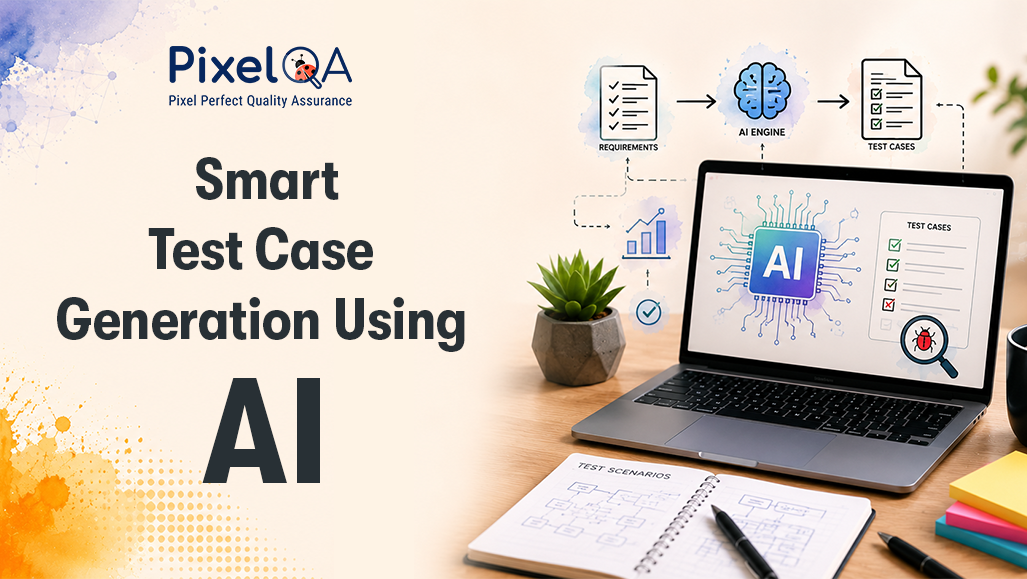
Artificial Intelligence is changing Software Testing. One of the important uses of the ai testing services is generating smart test cases. AI tools can create test scenarios by looking at requirements, application workflows, user actions, and past defects. This helps QA teams work more efficiently by reducing repetitive work and finding key test scenarios that manual testing might miss. AI-powered tools make testing easier and more effective, allowing teams to focus more on important testing activities and improving the overall quality of software testing.
Test Case Generation is really important for quality assurance processes. It helps us save time. Makes sure the results are accurate. This way we can get software out to people faster. Test Case Generation is a deal because it makes our work easier and helps us get things done quickly. We use Test Case Generation to improve the quality of software.
What is Smart Test Case Generation
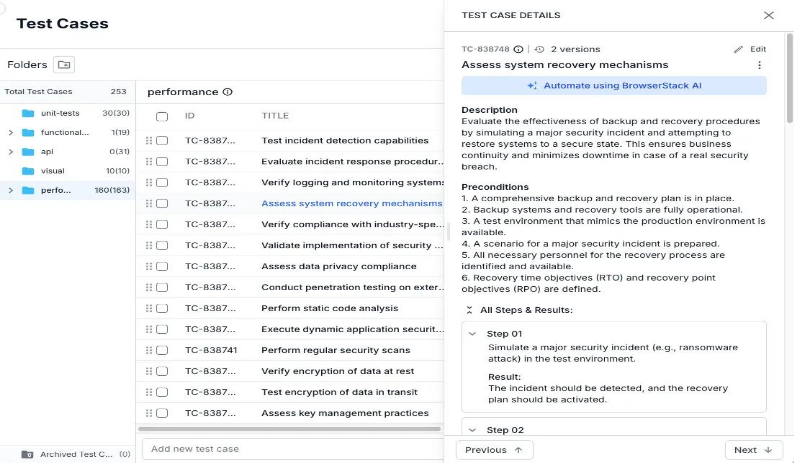
Test Case Generation is a cool way to make tests for software. It uses machines that can learn and automate things to create tests on its own. We do not have to write every test. The machine looks at the data from the application. Makes the best tests in just a few seconds. The Smart Test Case Generation method is very fast. It helps us a lot. Smart Test Case Generation is helpful because it saves us time.
AI systems can study:
- Requirement documents
- User stories
- Existing workflows
- UI elements
- Historical bugs
- API responses
Based on this information, AI generates positive, negative, boundary, and edge-case test scenarios. These automatically generated cases help improve software quality and reduce the risk of missing critical validations.
For example, if a requirement says:
“Users should not be able to login with invalid credentials”
AI can instantly generate multiple scenarios such as:
- Empty username validation
- Invalid password validation
- Special character validation
- SQL injection testing
- Multiple failed login attempts
This reduces the manual effort required from QA engineers and speeds up the testing process significantly.

Limitations of Traditional Test Case Creation
Traditional manual test case generation has a lot of problems. It takes a time and a lot of work to create and maintain a big list of test cases for traditional manual test case generation. For example when the application workflows or user interface elements in the application workflows change the people testing the application workflows and user interface elements usually have to update the existing test cases, for manual test case generation by hand.
Manual testing also increases the possibility of:
- Missing edge cases
- Human errors
- Incomplete validations
- Limited regression coverage
When we are working on software projects it is really hard to keep track of all the test cases, for the software projects every time we make a version of the software projects. This can slow down the process of getting the software projects out to people.
The thing, about AI is that it can help us with this problem by doing the testing tasks over and over again and finding the most important things that we need to test.
How AI Improves Software Testing
AI enhances software testing by making the process smarter, faster, and more efficient. One major advantage is automatic edge-case identification. AI tools can predict risky scenarios based on previous defects and application behavior. These may include:
- Invalid date selections
- Duplicate data entries
- Empty form submissions
- Boundary value validations
- Long text field validations
Another important feature is self-healing automation. In traditional automation frameworks, UI changes often break automation scripts. AI-powered testing tools can automatically identify updated UI elements and modify locators without requiring manual intervention. This significantly reduces maintenance effort and improves automation stability.
The Artificial Intelligence system helps with testing by looking at where things went wrong in the past and finding the parts of the application that're most likely to have problems. The teams that do Quality Assurance can focus their testing on the important parts of the application, which helps to cut down on problems when the application is released and makes people feel more confident, about the release. The Artificial Intelligence system supports this by analyzing defects and identifying high-risk areas of the application.
Popular AI Testing Tools
Many organizations are using intelligence testing tools to improve their quality assurance processes. Some popular tools include:
- Testim
- Functionize
- Mabl
- Applitools
- ACCELQ
- Katalon AI
- Selenium with AI integrations
- ChatGPT for test case generation
These tools help automate:
- Test case generation
- Regression testing
- Visual validation
- Defect prediction
- Automation maintenance
AI testing platforms improve overall testing efficiency and help teams execute larger regression suites within shorter durations.
Benefits of Smart Test Case Generation Using AI
Smart Test Case Generation provides several important advantages for QA teams and organizations.
Faster Testing Process
AI can generate test cases within seconds, reducing the overall testing effort and accelerating release cycles.
Better Test Coverage
AI identifies hidden and edge-case scenarios that are often missed during manual testing.
Reduced Manual Effort
QA engineers do not spend a lot of time writing the test cases. This means QA engineers can focus more on business testing. QA engineers can use this time to do other important things like exploratory testing and business testing.
Improved Accuracy
AI minimizes human errors during test design and improves validation quality.
Easier Maintenance
Self-healing automation helps reduce script failures that happen because of changes in the user interface. This makes automation more stable.
When software systems get more complicated the benefits of self-healing automation make AI-powered testing really valuable, for teams that develop software nowadays.
Challenges of AI in Testing
Although AI offers many advantages, there are still some challenges in implementation. Organizations may require additional time and training to effectively adopt AI-powered testing tools. Some enterprise tools can also be expensive depending on project requirements.
AI systems work best when they have access to high-quality application data and historical defect information. Integrating AI testing with legacy applications may also require additional setup and customization.
However, despite these challenges, AI adoption in software testing is growing rapidly because of its long-term efficiency and productivity benefits.
Conclusion
Using Artificial Intelligence for test case generation is really changing the way we test software these days. It is making things more efficient covering things that we test and it means we have to do less work by hand.
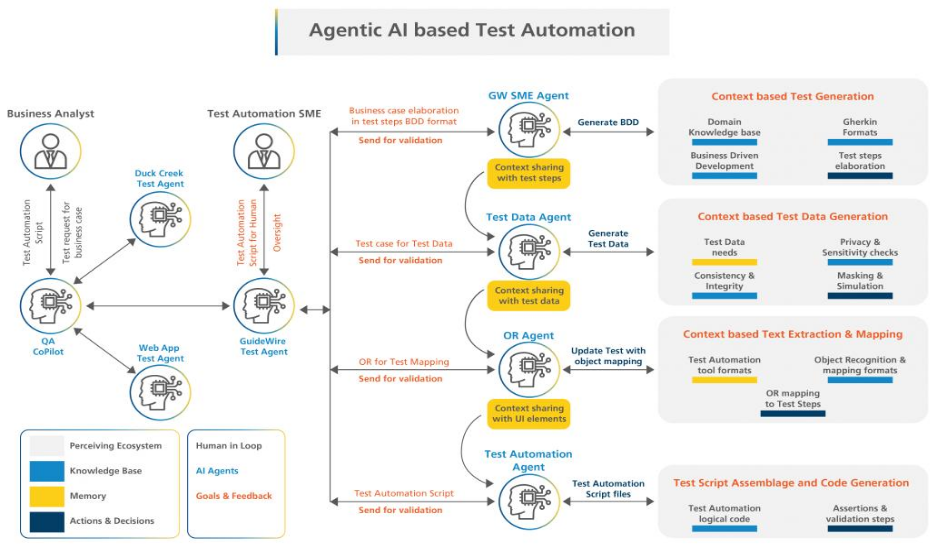
The tools that use Artificial Intelligence for testing help the people who test the software make plans, for testing find problems that are hard to see and keep the systems that run the tests working better.
As companies keep getting faster at making things and using CI/CD practices testing solutions that use Artificial Intelligence and Software Testing Services will become a very important part of every Quality Assurance strategy. Artificial Intelligence may not totally replace the people who test things. It will really help Quality Assurance teams get more work done and do more things in the future. Quality Assurance teams will be able to do their jobs with Artificial Intelligence.