
QA Strategy Guide: In-House Teams vs. Outsourcing Testing
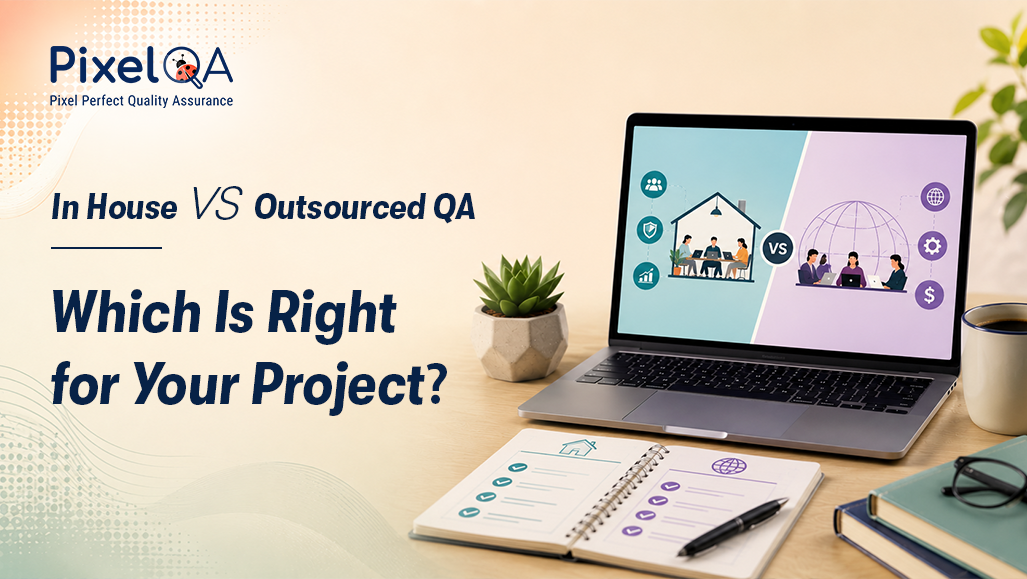
Software quality determines whether a product actually survives. You can have the most beautiful design on the market, but users will dump the app the second they hit lag, bugs, or broken workflows. Testing is what keeps the product alive.
When you sit down to plan a QA strategy, you kinda run into a fork in the road. Do you make an internal team from scratch, or do you hand the work over to an Software Testing Company. Either choice is sort of shaky in its own way. The right direction depends on a few very practical constraints, like how quickly you need to ship and what it is you’re actually trying to build. Let’s see how these things stack up in real life.
Understanding In House QA
If you go the in-house QA route, you're hiring full-time testers to sit right next to your developers. The real win here is context. An internal QA team actually knows your product inside and out. They understand what your users actually care about because they're plugged into the daily product meetings. When a feature pivots mid-week, they already know about it.
It also makes debugging a lot less painful. Instead of filing a ticket into a void, a tester can just ping a developer, share a screen, and sort it out in five minutes. The catch, obviously, is the budget. Building an internal team means dealing with tech recruiters and adding a massive chunk of fixed overhead to your payroll. If you're a boot-strapped startup or managing a short-term project, burning cash on a permanent QA department usually doesn't make sense.

Understanding Outsourced QA
Outsourced QA is basically like hiring a plug-and-play testing team on demand. Instead of building an entire QA department from scratch, you pull in an external agency to run alongside your developers.
The obvious upside is that you get specialized skills without the hiring overhead. These firms work across dozens of different products and tech stacks. So they usually arrive with automation frameworks and testing methodologies already figured out. It’s also just way cheaper and more flexible than hiring full time staff. If you have a massive product launch or a sudden growth spurt, you can scale up the team for a few weeks, and then scale back down when things quiet down. No dealing with severance or idle employees.
You also skip the infrastructure costs. A decent QA firm already owns the devices, browsers, and operating systems you need to test on, saving you from buying a test lab worth of hardware. The catch? Onboarding takes time. An outside team doesn’t know your product, your internal workflows, or what your business actually cares about on day one. If you don't spend the time to onboard them properly and set up tight communication lines, you're basically just burning money.
Comparing Costs
When you're trying to choose between hiring an in house QA team or outsourcing your testing, budget is usually the first thing on the table. Building an internal team is an expensive, long term commitment. You have to factor in benefits, recruitment fees, ongoing training, and software licenses. The real kicker is that these costs are fixed. Whether your developers are pushing massive code updates or sitting through a quiet maintenance phase. You are paying the exact same amount every month.
Outsourcing shifts that dynamic to a pay as you go model. If you have a major launch coming up, you can scale up your testing resources immediately, and then drop them back down when the work dries up. It gives you much tighter control over your cash flow. Especially if your business doesn't actually need full time, year round testing coverage. If you want to keep your product stable without paying for idle bench time, outsourcing is just a smart logistical move.
Scalability and Resource Availability
Project requirements rarely stay still. Workloads spike around big product releases, major updates, or seasonal rushes, and trying to scale an internal QA team to meet those peaks is hard. Hiring takes time. Onboarding delays your actual testing and if demand drops next month, you are stuck paying for underutilized staff.
Outsourcing gives you a lot more flexibility. You can bring on extra testers, automation engineers, or performance specialists quickly to handle the rush. Then scale back down without any long term commitments. If you are juggling multiple projects or dealing with unpredictable workloads, that kind of scalability is a massive win.
Quality and Expertise
Software testing has gotten incredibly messy. Building an app now means worrying about functional bugs, speed, security, and how the UI holds up across dozens of different devices. Your in house team probably knows the product inside out. But expecting them to be world class experts in every single testing discipline is unrealistic. Fixing that gap internally usually turns into an expensive cycle of hiring and training.
That is why companies outsource. External QA firms employ specialists who spend all day focusing on narrow testing fields, including advanced Automation Testing Services. Because these engineers rotate through different projects, they catch the weird edge cases and blind spots that an internal team blinded by familiarity tends to overlook. They already know the latest tools, so you do not have to pay for their learning curve. If you need advanced testing capabilities right now, outsourcing gets you that skill set without the overhead.
Communication and Collaboration
Good communication makes or breaks software testing. Internal teams have it easy, testers can literally slide into a developer's DMs or yell across the room when a feature breaks. With an outsourced QA partner, you lose that organic chatter. You have to actually schedule the communication through regular syncs and clear status reports. Luckily, most modern QA agencies plug straight into your agile sprints, which keeps things moving fast. If you run the partnership right, they won't feel like a vendor, they'll just feel like a remote arm of your actual team.
Which Option Is Right for Your Project?
The choice between putting together a QA team or hiring a vendor pretty much boils down to how your business actually runs, in real life. If you’re mostly focused on one product, need near constant test coverage, and you want the testers actually in the meetings, like sitting in on those daily standups, then bringing people in house is probably the best bet. On the other hand, if you need specialized technical skills right away, have fluctuating testing cycles, or simply need to protect your runway, outsourcing handles those issues incredibly well.
A lot of engineering organizations just do both. They keep a small core team inside who know the product inside out to handle strategy, then hand off things like automation scripts, load testing, and massive regression cycles to an outside partner. It keeps your internal people focused without drowning them in execution.
The Conclusion
There is no magic answer to the in-house versus outsourced QA debate. Anyone telling you one is universally better than the other is probably trying to sell you something. The reality is that it's a trade-off. If you have a highly complex, long-term product where deep context is everything, building an internal team usually pays off. If you’re on a tight deadline, need specialized device testing, or just can’t deal with the overhead of full-time salaries right now, outsourcing is kind of a lifesaver. Instead of hunting for some perfect formula, focus on the real bottlenecks you have. The best QA setup is the one that actually stops bugs from reaching your users, without grinding your deployment cycle to a hard halt.
Looking for experienced QA professionals to support your software testing needs? Contact PixelQA today to discuss your project and discover how our dedicated testing services can help improve software quality, reduce risks, and accelerate release cycles.