
How to Think Like a QA Engineer

Introduction
When people hear the term Quality Assurance, they usually think it is about finding problems with the software before it gets released. Finding problems is a part of the job. Quality Assurance is more than that. A Quality Assurance engineer has a lot of responsibility. The Quality Assurance professional makes sure the software works like it should. The Quality Assurance professional also makes sure people have experience when they use the software. The Quality Assurance professional must make sure the software meets the needs of the business.
Being a QA engineer is about being curious and paying attention to details. You must think about what could go. QA engineers do not just think everything is okay. They ask themselves what could go wrong. This way they can find problems and the product will be better. QA engineers are always thinking like this to make sure the product is good. QA engineers and their way of thinking are very important to make a product.
In this blog, we'll explore the mindset and habits that help QA engineers think differently and contribute to building better software.
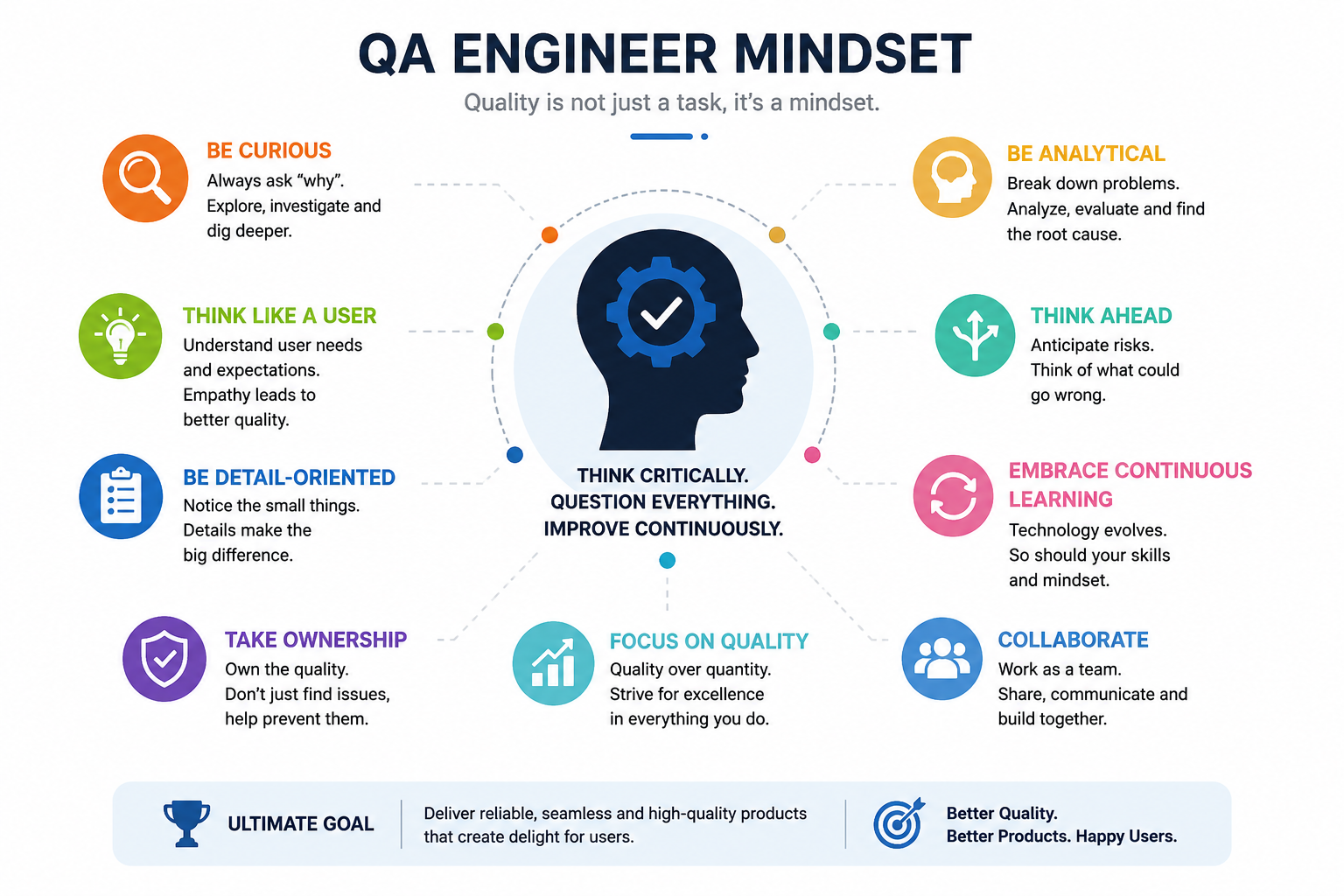
1. Think Like the User
One of the important things about being a QA engineer is that you can look at the product like a user would.
People who use the product do not know what is going on behind the scenes. They just want the product to work properly. That is why Quality Assurance engineers test the features of the product in the way that real users of the product would use the product.
For example, if you are testing a class registration system do not just verify that a student can register for a class successfully. Quality Assurance engineers should test the class registration system in the same way that real users of the online class registration system would use it. Ask yourself:
- What happens if the class is already full?
- What if the payment fails?
- Can the user register twice?
- What if the internet disconnects during registration?
By thinking like a user, you can uncover issues that might otherwise be missed.
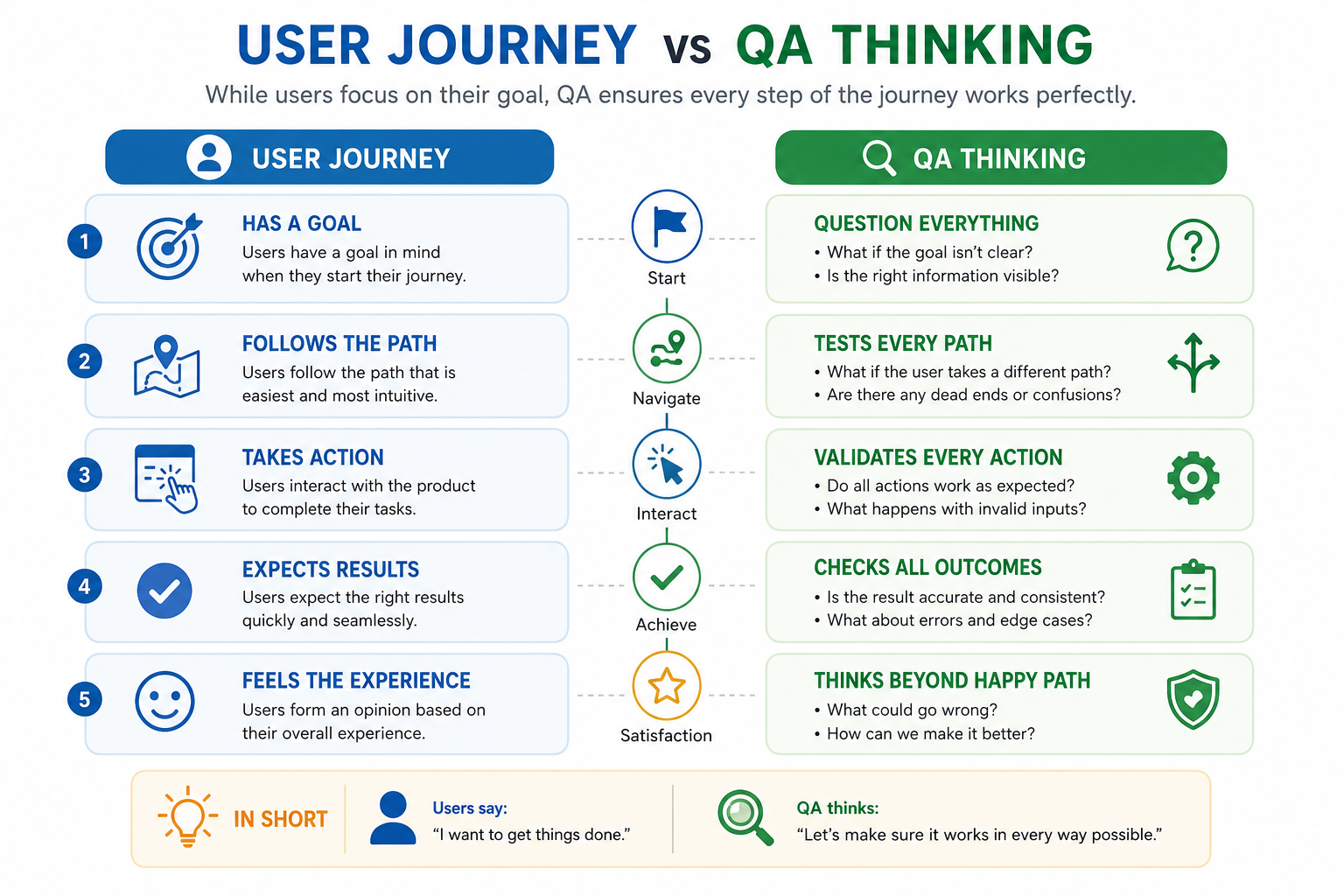
2. Don't Just Test the Happy Path
The happy path is what we want to happen. This is when everything goes right and nothing goes wrong. People who actually use things do not always do what we expect. Sometimes they make mistakes or something unexpected happens to the path.
A good QA engineer explores different possibilities, including:
- Invalid inputs
- Empty fields
- Slow internet connection
- Browser refresh during submission
- Duplicate clicks
- Incorrect file uploads
Testing these scenarios helps ensure the application behaves correctly even under unexpected conditions.
3. Ask Questions
QA engineers are naturally curious. Instead of simply following test cases, they ask questions such as:
- Why does this feature work this way?
- What happens if this data is missing?
- Can another feature affect this one?
- Are there any security concerns?
- Does this match the business requirement?
Asking the right questions often reveals hidden defects before they reach customers.
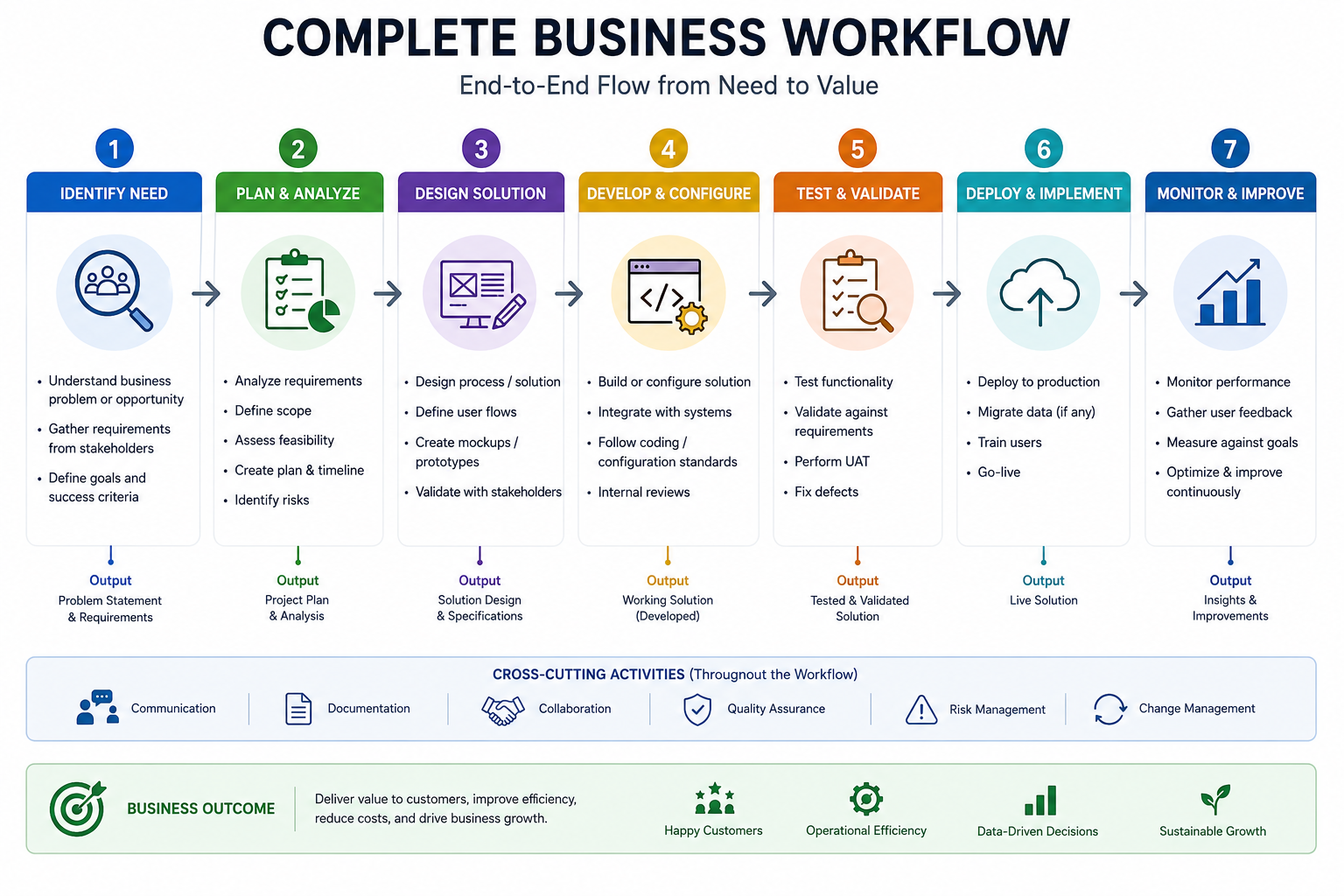
4. Understand the Business Requirements
Testing is not just about making sure a button works.
A feature might work perfectly from a point of view but the feature still might not do what the business needs and that is what testing for the feature is really, about which is making sure the feature meets the business needs of the business.
For example, after a student successfully enrolls, several business processes may also need to happen:
- Confirmation email is sent
- Payment is recorded
- Attendance is created
- Student is added to the correct season
A QA engineer understands these workflows and verifies the complete business process during integration testing services, not just individual features.
5. Pay Attention to Details
Small issues can create a poor user experience. QA engineers notice things like:
- Spelling mistakes
- Incorrect labels
- Broken links
- Misaligned buttons
- Incorrect error messages
- Inconsistent colors or fonts
These things may seem small. When you put them all together, they change how people think about the application.
Paying attention to detail is what makes a good tester really good. It is what separates a tester from a great tester.
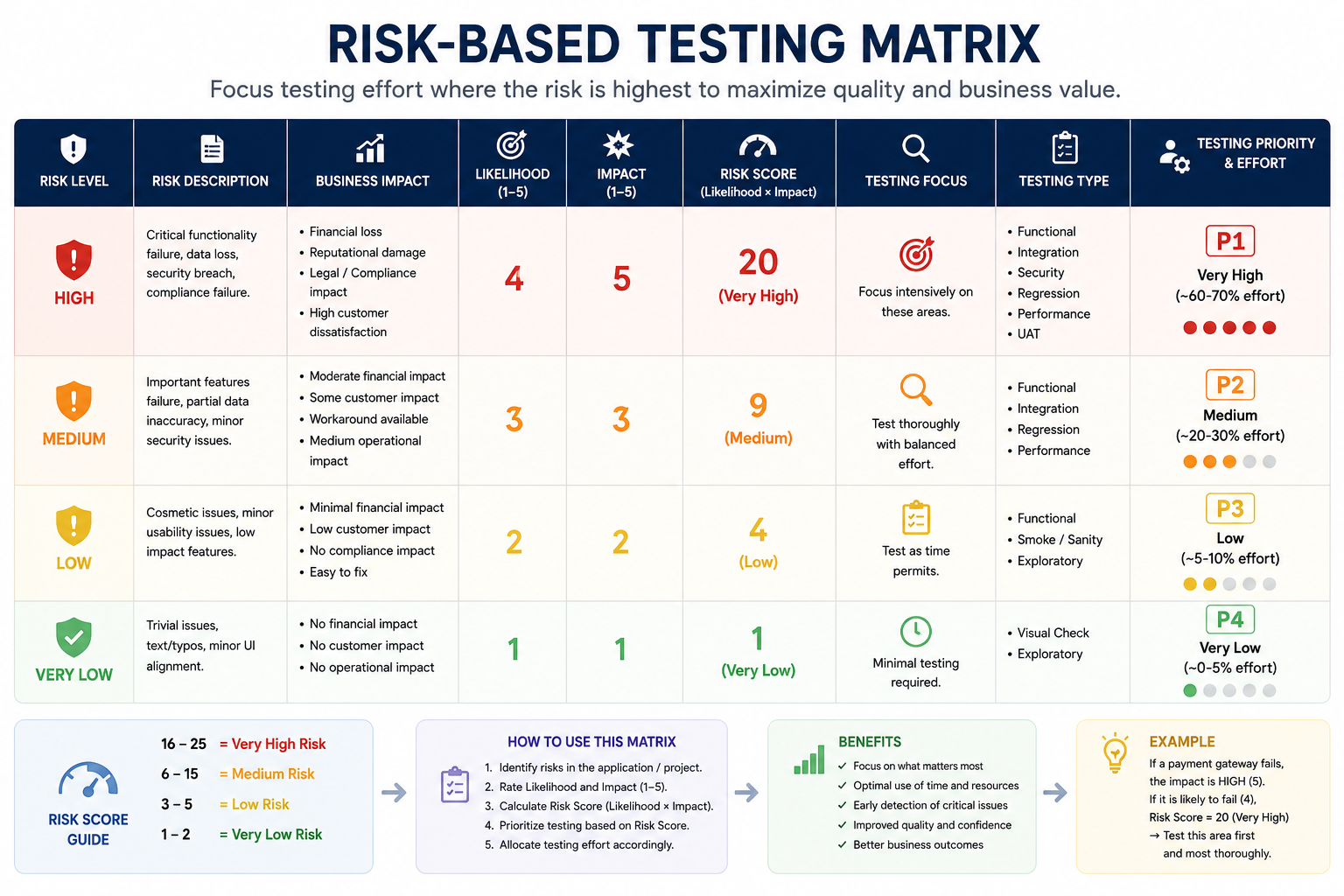
6. Prioritize Based on Risk
Not every bug has the same impact. A typo on a settings page is less critical than a payment failure or login issue.
QA engineers focus more on testing high-risk areas such as:
- Authentication
- Payments
- User permissions
- Data security
- API integrations
- Data integration testing
- Reports
This approach ensures that testing time is spent where it matters most.
7. Communicate Clearly
Finding a bug is only useful if developers can understand and reproduce it.
A good bug report should include:
- Clear title
- Steps to reproduce
- Expected result
- Actual result
- Screenshots or recordings
- Environment details
Good communication reduces back-and-forth discussions and helps developers resolve issues faster.
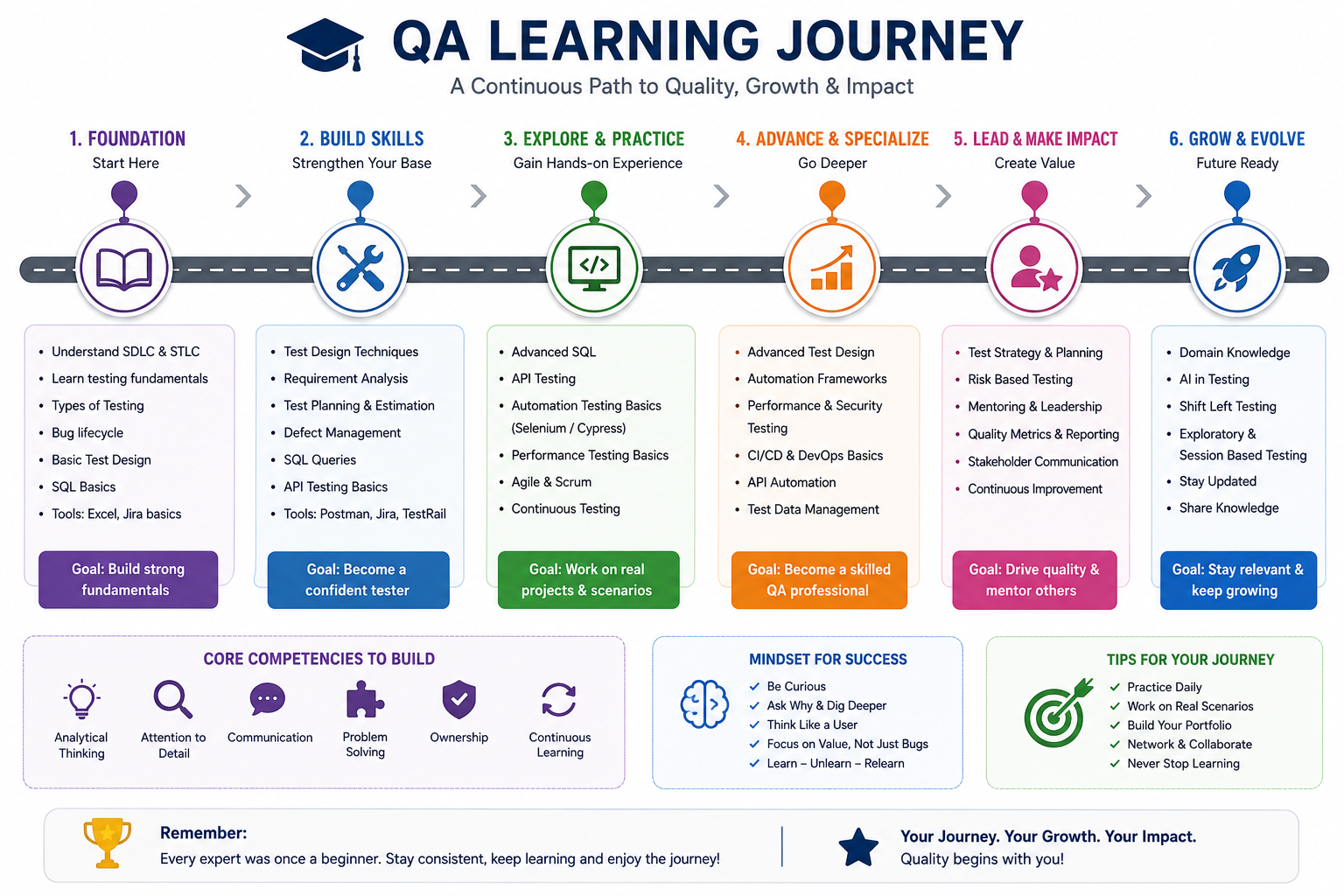
8. Keep Learning
Technology changes constantly, and so does software testing. Successful QA engineers continue learning by:
- Exploring automation tools
- Learning API testing
- Understanding databases
- Reading release notes
- Practicing exploratory testing
Continuous learning helps QA professionals stay relevant and improve their testing skills.
The Conclusion
Thinking like a Quality Assurance engineer is more than doing the test cases. It is about being curious about the software asking questions, about the software understanding what the users of the software do, and making sure the software gives the users of the software the best experience that the software can give.
A good Quality Assurance engineer does not just find problems. A good Quality Assurance engineer actually helps prevent problems from happening in the place. They work closely with the developers to understand what the business wants to accomplish. Quality Assurance engineers always look for ways to make the product even better.
If you are just starting to learn about Quality Assurance or if you want to get better at testing, you should think like a Quality Assurance engineer. This will make you a lot better at your job. It will help you make software that people can really trust and rely on.
At the end of the day, QA engineer work is not just for the QA team. Everyone who makes software should think about quality. This helps everyone make software.