
How to Integrate QA into DevOps Pipelines
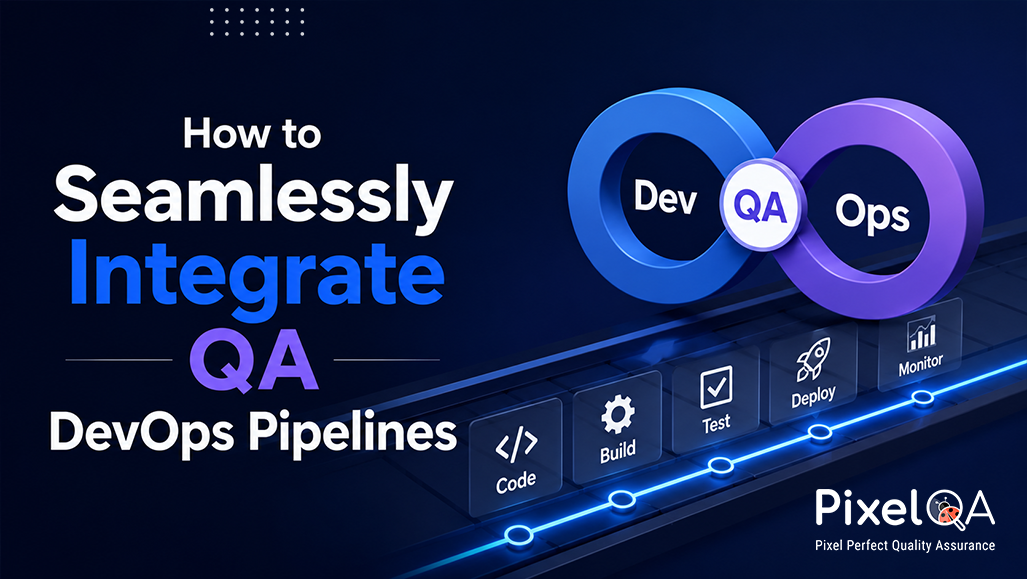
If you're trying to ship software fast, traditional QA is a massive bottleneck. Teams rush to adopt DevOps so they can push code out the door, but accelerating a broken process just means you break things faster. Leaving testing as an afterthought at the end of a cycle ruins momentum.
The fix is integrating your checks straight into the build pipeline. When automation catches a bug immediately after a commit, it takes minutes to fix instead of days. Getting there isn't just a tooling problem, though it requires changing how the team actually thinks about ownership. A reliable software testing company can help implement continuous testing practices, but success still depends on the entire team embracing quality as a shared responsibility. If you aren't testing continuously, you aren't really doing DevOps. You're just throwing code over the wall and hoping for the best.
The Shift Left Approach to Quality
If you are still saving testing for the final stretch right before a release, your continuous delivery pipeline is going to choke. Waiting until the end just creates a feedback bottleneck. Shifting left changes that by moving testing to the very start of the cycle. Developers and testers actually sit down together to map out acceptance criteria before anyone writes a single line of code.
When QA starts during the requirements phase, it saves everyone a lot of guesswork. Engineers can write solid unit tests because the expectations are already locked in. Testers don't have to wait around either; they can build out automation scripts using placeholders for UI elements that are still being designed. Getting everyone on the same page early means you catch messy architectural flaws before they turn into expensive production bugs.

Building the Automated Testing Strategy
Automation is the backbone of continuous QA, but trying to automate 100% of your test suite is a trap. It's inefficient and a nightmare to maintain. The teams that actually scale successfully rely on a strict testing pyramid. Unit tests are the floor. They're fast, pinpoint specific logic, and run on every single commit. If a dev breaks something, they know within seconds.
Up a level, you have integration and API tests to check how separate components or services talk to each other. Because they bypass the UI entirely, they're still fast and rarely suffer from the flakiness that plagues frontend testing. This is where Automation Testing Services provide significant value by streamlining validation across interconnected systems and ensuring consistent performance. UI and end-to-end (E2E) workflows live at the very top. They copy actual human behavior, which makes them highly valuable but incredibly heavy and slow. If you don't limit these to critical user journeys like login or checkout, your deployment pipeline will ground to a halt.
Managing Test Data and Environments
Two things consistently wreck deployment pipelines. Broken test environments and bad data. If your automated tests are running against a drifting, Snowflake staging environment, you're going to get false results. You end up chasing ghosts or missing actual bugs. The fix is spinning up ephemeral environments using Infrastructure as Code. The environment exists solely to run the test suite and vanishes the second it's done. It keeps things accurate and stops you from burning money on idle cloud infrastructure.
Data is just as messy. Hardcoding values makes your tests fragile, but pulling live production data is a massive security risk. A better way is scripting your data seeding. You inject a realistic, anonymized dataset right before the execution phase. That way, every single run starts from a known, clean slate, and you can actually trust the results.
Handling Pipeline Feedback and Failures
An automated pipeline is useless if your team doesn't trust it. The moment tests start failing because of flaky scripts rather than actual bugs, developers just tune out the alerts. If you want to keep the pipeline clean, you need a zero-tolerance policy for bad tests. If something is unstable, quarantine it immediately. Get it out of the critical path, fix it, and only bring it back when it's reliable.
You also need to keep feedback loops incredibly short. If a build breaks, the dev who pushed the code should know within seconds via Slack or Teams. Don't make them go hunting through a massive, messy log file either. Send the exact error report directly to them so they can fix it while the context is still fresh.
Balancing Automation with Exploratory Testing
Automated scripts only check for the bugs you already know to look for. They're great for predictable, repetitive verification, but they're completely blind to weird edge cases, layout glitches, or awful user experiences. You still need human intuition to catch the stuff you didn't plan for.
That’s where exploratory testing comes in. Instead of following a script, testers just use the app like a real person. Messing with weird workflows, interrupting processes mid-way, and seeing where things break. Letting automation handle the mind-numbing regression checks clears the schedule for these high value human sessions. Speed is great, but you need both to actually cover your bases.
The Conclusion
Bringing QA into a DevOps pipeline isn't just a matter of installing new automation tools. It's about changing how your team thinks about ownership. If everyone assumes quality is the testing department's problem, the pipeline breaks. It has to be a shared metric across dev, ops, and product. Moving automated checks directly into the deployment workflow and catching bugs early is the only way to ship stable software without tanking your release velocity.
Are you looking to improve your deployment workflows and build reliable automated testing frameworks Contact PixelQA today to discover how our testing professionals can optimize your delivery pipelines.